



 Tomka/Alamy
The Slave Voyages database shows 824 more Africans arrived in British North America between 1626-1675. But according to Newby-Alexander, in the decades after the 1619 landing, more and more laws were passed in Virginia that were designed to erode Black people’s freedoms. Then in 1661, tempted by the prospect of free labour to fuel its agricultural expansion, Virginia passed a law stating any free person could own slaves. A year later, the Virginia General Assembly passed another law declaring that all children born to an enslaved mother would themselves be enslaved – effectively sowing the seeds of a form of slavery based almost entirely on race and extinguishing the brief legacy of Black empowerment and freedom that was born at Point Comfort.
Yet, this wouldn’t be the end of Point Comfort’s story. In fact, the reason that Pearson refers to this little-known site on the Chesapeake as “the birthplace of Black American culture” is that, in addition to being the first place where Black people could gain their freedom in the British Colonies, it also played another pivotal role in African American history.
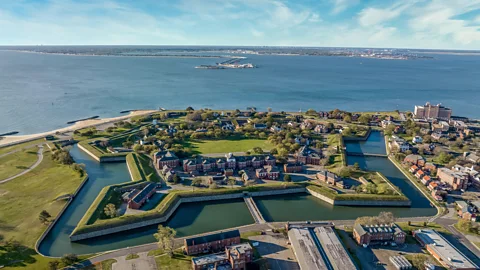
Exactly 200 years after Virginia legalised slavery, three enslaved Black men escaped from their “owners” in the midst of the US Civil War in 1861 and arrived at the site (now a military base called Fort Monroe), which was held by the Union army. Union General Benjamin Butler refused to return the men, declaring them “contraband” of war. Within a month, some 900 African American freedom-seekers had fled to Fort Comfort, transforming the military stronghold into a refuge of emancipation. To accommodate the influx, Union officials established the “Great Contraband Camp” in the war-torn remains of the surrounding city of Hampton. Today, this makeshift camp is considered the first self-contained Black community in the US, and it grew to a population of several thousand by 1865.
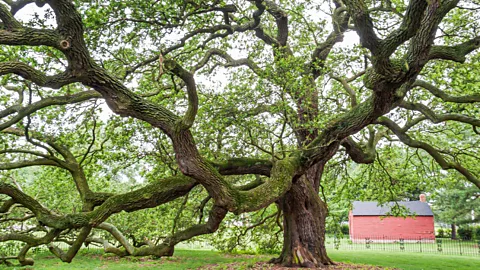
Today, travellers can learn about both the First Landing and the Great Contraband Camp as they tour the National Monument, as well as the Visitor & Education Center at Fort Monroe (nicknamed “Freedom’s Fortress”). Nearby, visitors can look up at the sprawling branches of the oak tree where Mary Smith Peake, the first Black teacher hired by the American Missionary Association taught the freedom-seeking “contrabands” how to read. In 1863, this same oak would be the site of the first Southern reading of the Emancipation Proclamation that led to the abolition of slavery in the US. Five years later, the historically Black Hampton University was founded at the site of the tree, and today, the graceful Emancipation Oak still stands at the university’s entrance.

 Jeffrey Isaac Greenberg 9+/Alamy