



The most famous of these battles took place in the summer of 1921, after some ten thousand miners began marching to a National Guard camp where more than a hundred union members were being held without charges for their involvement in an ongoing organizing effort. Don Chafin, the sheriff of Logan County, whose salary was paid by the coal companies, set up concrete bunkers, trenches, and machine-gun nests to block the route of the march. Several days of pitched battle erupted on Blair Mountain, which left at least a hundred people dead on both sides. “What you had is basically a First World War battlefield in the middle of the West Virginia hills,” Lloyd Tomlinson, the education coördinator of the Mine Wars Museum, in Matewan, told me.

New Deal labor laws enshrined the right to collectively bargain and to strike, which helped cement a deep and lasting bond between West Virginia and the Democratic Party. Franklin Roosevelt won more than sixty per cent of the state’s vote in 1936. But even in the best of times coal mining was a boom-and-bust industry tied to the health of the wider economy. In the fifties and sixties, wages and benefits grew for union miners, but the fear that jobs could disappear at any moment was often employed as a cudgel by industry bosses. A general lack of public investment throughout the state’s history compounded West Virginia’s economic problems. In Giardina’s land survey, for example, she found that a subsidiary of the Norfolk and Southern Railway owned a third of McDowell County. “In 1979, they were paying enough property tax to buy only a few school buses,” she told me.
The coal industry’s current relationship with labor in West Virginia was shaped, in large part, by Don Blankenship, the former C.E.O. of the Massey mining company, who ran a failed Senate campaign as a Republican in 2018. (“I am Trumpier than Trump,” he said at the time.) In 1984, the company refused to sign a collective-bargaining agreement with the union, setting off a violent fifteen-month strike. Blankenship, who was then a senior manager, led the company’s response. Massey bused in strikebreakers; guards patrolled the mine with guns and attack dogs. The company ultimately prevailed, and the power of the U.M.W.A. waned dramatically as non-union mines proliferated. “Unions, communities, people—everybody’s gonna have to learn to accept that in the United States you have a capitalist society,” Blankenship said in a 1986 documentary about the strike. “And that capitalism, from a business standpoint, is survival of the most productive.”
There are now fewer than three thousand unionized miners in West Virginia. Besides bringing benefits and higher wages for mine workers, the union helped to forge social cohesion and influence policy in mining communities. According to Lou Martin, a professor who teaches West Virginia history at Chatham University, in Pittsburgh, the diminishment of the U.M.W.A. is the single greatest culprit in turning coal country into a Republican stronghold. “Now you have the people once again most closely connected to the industry running the state,” he said. “I say ‘once again’ because, before the union, it was either the coal barons or their lawyers that held office.”
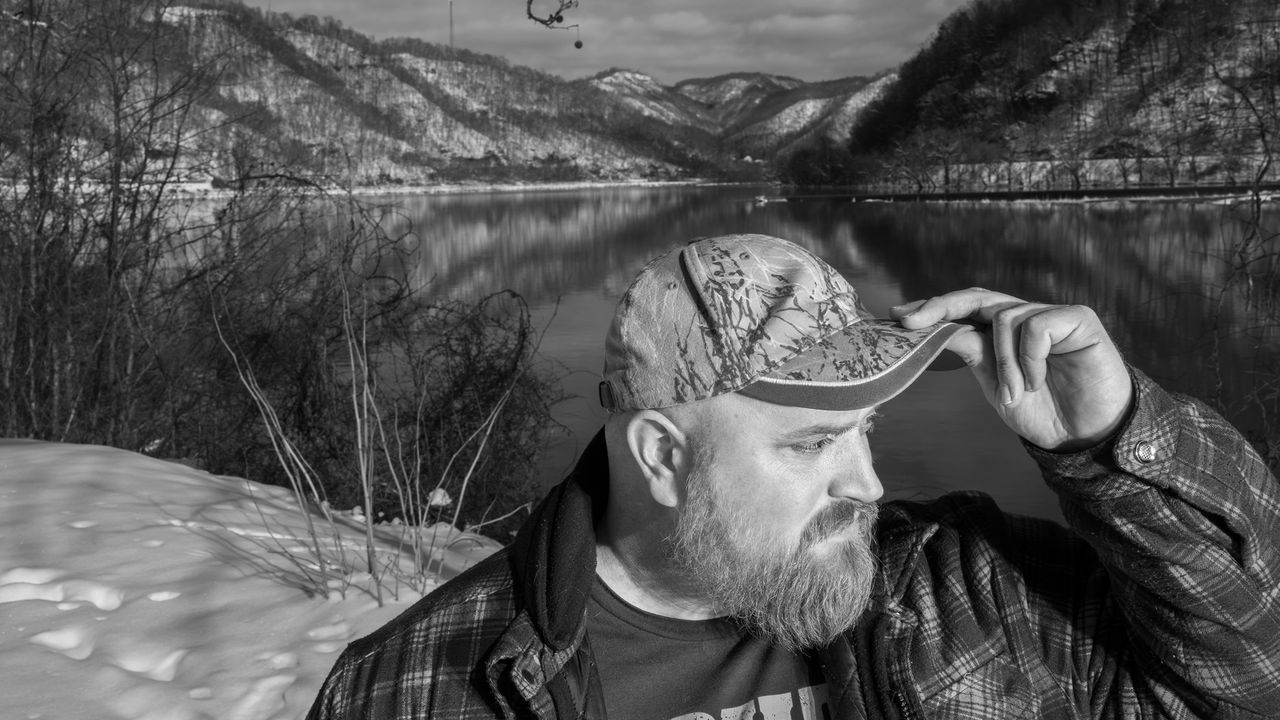
For three days, Shrewsbury and I travelled through the National Coal Heritage Area, the government’s designation for the thirteen counties in southern West Virginia where coal mining dominated most intensely. There were hardly any cars on the road, but the scattered remains of the mining industry—crumbling belt lines, dilapidated tipples, shuttered union halls—were everywhere. Coal seams poked through the snow, glistening in the sun. Shrewsbury pointed out a large mine where his grandfather worked for thirty years. The job left him with bowed legs and traces of black lung but also with health insurance for life and a modest pension.
Shrewsbury was born in Ripley, a small town of three thousand people in the Ohio River Valley. We pulled up to the house where he grew up, a farmstead with a fenced-in meadow. His father was a salesman; his mother worked on the farm. When Shrewsbury was a child, the property had been filled with cows, goats, sheep, donkeys, rabbits, cats, dogs, chickens, parrots, and llamas. “My mom couldn’t bear to part with them, so the farm kept growing,” he said. When he was in middle school, the family spent a few years in a town outside of Colorado Springs, where Shrewsbury faced stereotypes against Appalachians. “People automatically assume you’re just dumb,” he said. One teacher told him, “I don’t expect you to be able to do this, because you’re from West Virginia.”
