





By Janey Bolden
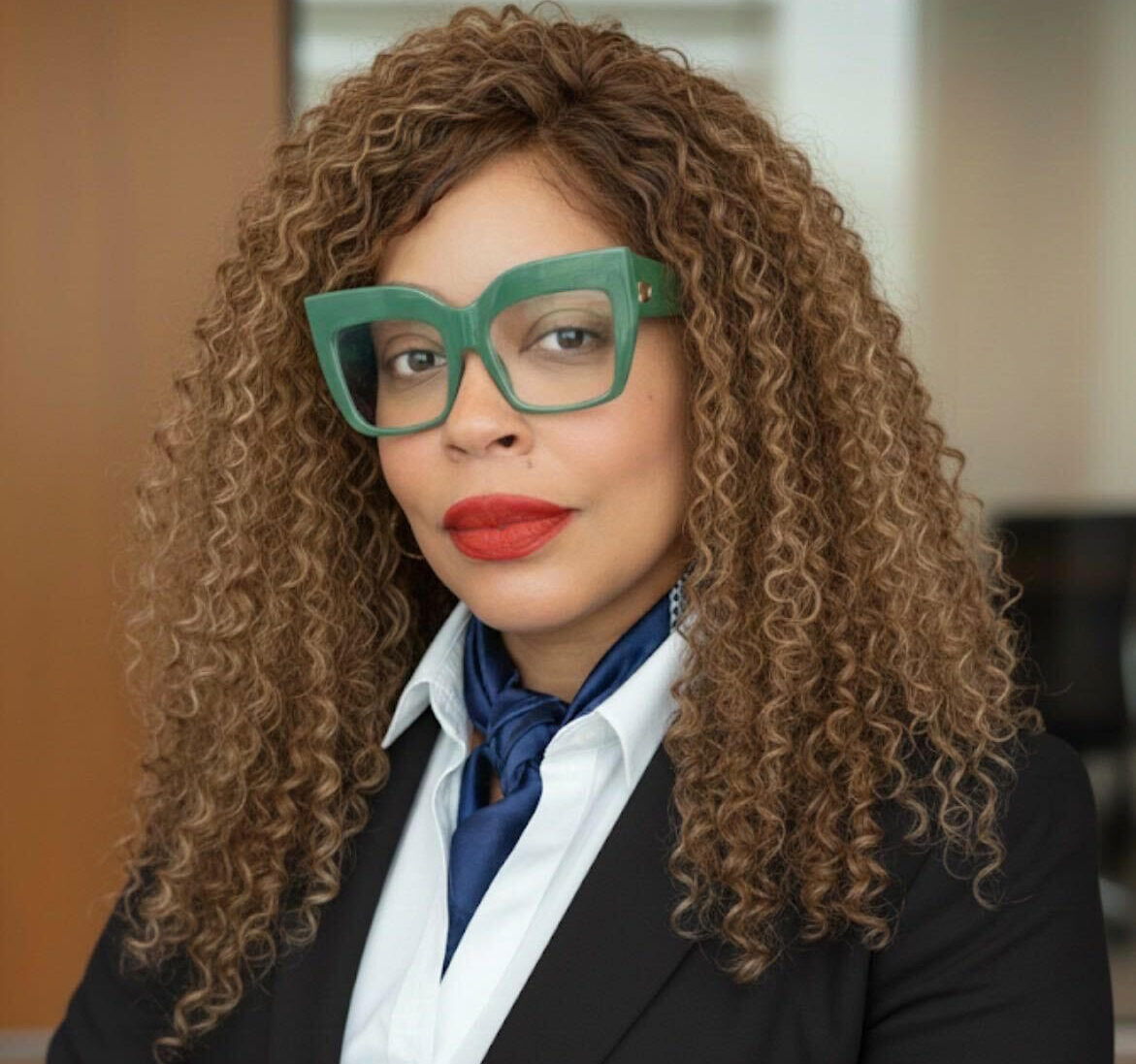
LaToya Williams-Belfort has spent her career building pathways for underserved communities, but taking on her new leadership role as executive director of the Bronx Community Foundation holds a deeper meaning for her as a Bronx native.
“It felt like a homecoming,” Williams-Belfort said BLACK ENTERPRISE. “Throughout my career, I’ve been really intentional and really blessed to do work for communities that I’ve really come to understand, and then bring people to the table to make investments and solutions for those communities.”
Williams-Belfort grew up in the Bronx, and long before she had the language of systems and structures, she understood what it meant to live within them. “Growing up in the Bronx, I was able to quickly understand systemic barriers,” she said. “It was very clear to me that my community, my family, were hard-working, God-fearing, family-oriented people, but you would hear terms like, ‘we just can’t get a break’ or ‘we just don’t have certain opportunities.’
Those early observations stayed with him as he moved into school, the workforce, and eventually into philanthropy. Over time, they crystallized into a circle that would guide his leadership. “I finally settled on this word that has been so important in my life: justice,” he said. “What does it mean to have equal opportunities? Many people think that equality means equality. We know they are two completely different things.”
When the country reached a tipping point after the death of George Floyd in 2020, Williams-Belfort had already spent years working in charity. What changed then was his sense of urgency around solutions. “The country was talking about racism in a way it had never been in my lifetime,” he said. “But we were all talking about the problems and how we got here. Talking about solutions was where I really wanted to lean in.”
That desire to move from diagnosis to action led him to the nonprofit 15% Pledge, where he became the inaugural executive director. The goal was clear. use the machinery of capitalism to close opportunity gaps. “When we think about equal opportunity, when we think about building wealth, when we think about the racial wealth gap under this umbrella of capitalism, what the promise did as a release to create pathways for black entrepreneurs to scale was a tangible solution,” he said. “If we could help entrepreneurs have sustainable access to the supply chains of billion-dollar corporations and really create wealth, then now we’re talking about a more inclusive economy.”
Under his leadership, the organization expanded rapidly. “I was there for almost five years,” he said. “We took the organization to a $7 million nonprofit, and we were able to have a $14 billion impact for a community of over 10,000 black-owned businesses.” When the pledge was launched, he noted that the community was about 1,000.
However, as proud as she is of that work, Williams-Belfort saw its limits. Sustainable change required not just plans but a capital strategy. That realization shaped his decision to take on his current role at the Bronx Community Foundation, which operates as a funding organization rather than a direct service nonprofit.
“We don’t just implement projects,” he said. “It is a financing organization.” For Williams-Belfort, that difference creates an opportunity. “How do you support communities and nonprofits that are working on the ground, but also thinking about sustainability, capacity building, and technology to do the job the right way for the long term?”
The fund, he noted, is approaching its second decade. “The foundation is only 10 years old,” he said. “They’ve been doing it the right ways for a long time. But what is the next iteration of sustainability, growth and innovation?”
His answer is based on both data and lived experience. One of the biggest challenges he sees in the Bronx isn’t a lack of talent or effort, but a persistent narrative problem. “I think there’s so much bias in thinking about what’s possible for the Bronx,” he said. “A lot of people I meet have this 1970s, early ’80s ideology, like a ‘The Bronx is Burning’ kind of stereotypical understanding of what the Bronx is.”
He has encountered that bias firsthand. “I was going to high school in Manhattan and I would meet people and they would say to me, “Well, it doesn’t look like you’re from the Bronx,” Williams-Belfort recalled. “And I’d say, ‘What does that mean?’
According to him, those assumptions have real consequences. “When we think about investment and philanthropy and driving resources, it’s in direct contrast to this bias about the Bronx that came out of the ’70s and ’80s,” he said. “And that’s not the landscape right now. I think there’s a huge opportunity to create pathways for children, families and Bronxites.”
He sees signs of this shift everywhere, from cultural production to political momentum. “The youth of the Bronx make things happen,” he said. “Even if you look at the last mayoral election, Mamdani started his campaign on Fordham Road. I think that’s intentional when you think about how the momentum is going around the neighborhood.”
That momentum aligns with the Foundation’s strategy, which is built on collaboration rather than abandoned giving. “One of the things I’m really excited about is this expansion of cross-industry partnerships,” Williams-Belfort said. “My secret sauce is really bringing people to the table to collaborate, to take a collective action approach in ways that they wouldn’t necessarily see themselves working together.”
The Bronx, he believes, is uniquely positioned for that model. “Because of the Bronx’s history with music, art and activism, I think it’s poised to continue working that way,” he said. “How do we bring together corporate stakeholders, elected officials, advocates and traditional business people and revitalize the resilience and creativity of the Bronx as we think about who and how we invest?”
The need, however, remains enormous. Williams-Belfort points to the Foundation’s extensive listening process as a key strength. “The foundation has had over 1,000 community conversations,” he said. “It’s important to have that real data around the need.” Four priority areas emerged from those conversations: digital equity, housing, health, and economic sustainability.
“What we’re doing is how we’re building our participatory grantmaking strategy to meet those needs in a very systematic, coordinated way,” he said. Equally important is how the money moves. “Not just giving grants, but thinking about capacity building, sustainability and how we work as a collective action unit.”
He also focuses on trust-based philanthropy and long-term commitments. “Two-year grants, three-year grants,” he said. “Being able to get that long-term support to really move the needle on some of these very deep and systemic-level challenges.”
Although she’s only been in the role for a few weeks, one moment already confirmed that Williams-Belfort is in the right place. “I had my fourth quarter solo full-time board meeting,” he said. “It was a roll-up day. We asked hard questions. We talked about participatory grants, sustainability, and what the next 10 years look like. We invested $15 million. How do we get to $50 million?” He left exhausted and energized. “I used to call my teachers and my village and say: “I’ve had a great day and I think this is going to be really great.”
According to him, both experience and family give him a foundation. “Here’s the big piece,” he said, referring to decades of nonprofit leadership. “But the heart of it is my two sons, both born in the Bronx.” He wants the future he is building to be tangible for them. “I want them and young people like them to have equal opportunities, to create a life that brings them joy and allows them to thrive.”
When he looks back five years, success is measurable and deeply human. “It’s all about the data, it’s all about the numbers,” Williams-Belfort said. “If we can get to the $25 million mark, if we can touch 50,000, 100,000 Bronxites, I’d feel like I’m doing a good job.” But just as important is the story people tell about the neighborhood. “If we can deconstruct the idea of ’The Bronx is on fire’ and transform that narrative into the Bronx as a place of collective action, community power and investment, then we’re doing the right thing.”
For Williams-Belfort, the job has come full circle. A kid who once heard his community described as lacking is now trying to prove otherwise with strategy, capital and an unwavering belief that the Bronx’s future can be defined not by stereotypes, but by opportunity.
RELATED CONTENT: SheaMoisture Joins Fifteen Percent Pledge to Expand Dartmouth Scholarship Supporting Black Women Entrepreneurs
