


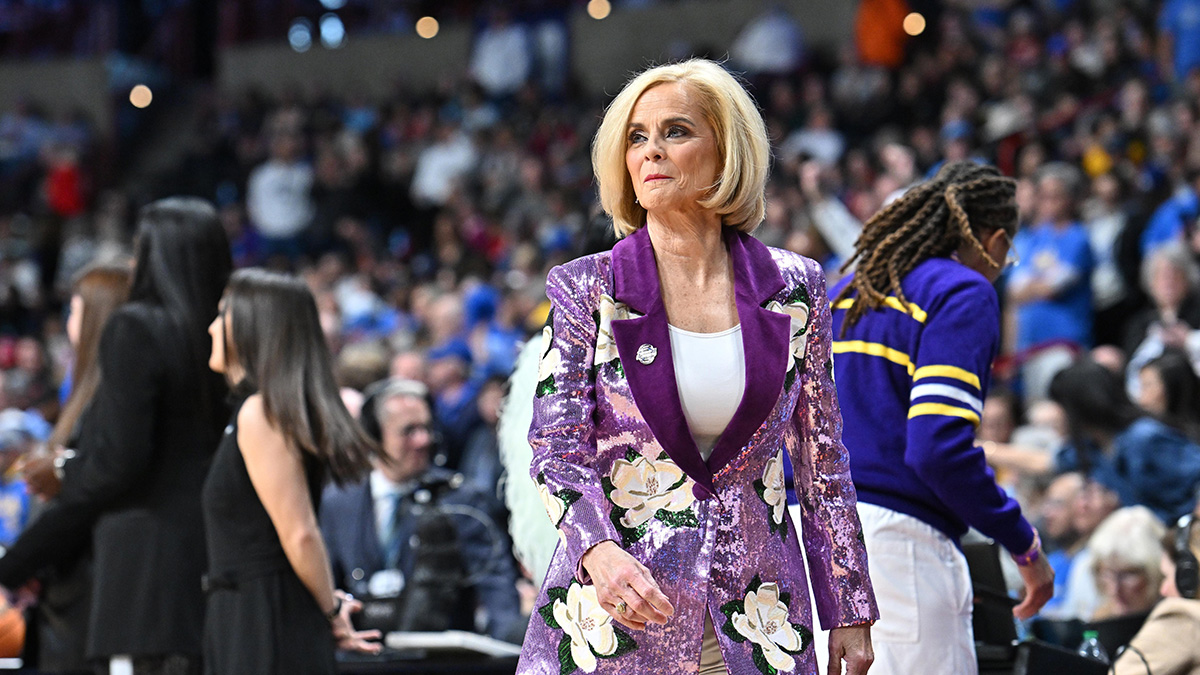

LSU women’s basketball coach Kim Mulkey says scheduling games against HBCU programs is about more than filling non-conference spots — it’s about creating financial opportunities for schools navigating the realities of college athletics in an era of name, image and likeness. Mulkey’s comments reignited debate over how so-called “guarantee games” work as a vital revenue stream for HBCU athletic departments at a time when the economic gap in college sports continues to widen.

Speaking recently, Mulkey explained that intentionally playing HBCUs allows those programs to receive guaranteed payments, money that can be reinvested in scholarships, travel, facilities and overall program sustainability. His words were first reported by the news HBCU Sportsdetailed Mulkey’s perspective on why these matchups are important in today’s college basketball landscape.
Why ‘Guarantee Games’ are more important than ever
A guarantee game in college athletics usually involves a larger, well-funded program paying a predetermined fee to compete against a smaller school — often on the home court of the larger school. For many HBCUs, these games represent one of the most reliable sources of non-conference revenue.
Mulkey directly acknowledged this reality, noting that financial disparities were even more pronounced during the NIL era. While power-conference programs generate revenue through television deals, sponsorships and donor pools, many HBCUs rely on guarantee money to keep their athletic programs competitive and operational. Mulkey viewed the decision to play HBCUs as a practical way to support schools that “we don’t have” while still providing his team with meaningful early-season competition.
His comments echo the reportage Yahoo Sportsit underscored Mulkey’s long-term approach to the plan and his belief that high-profile programs can play a role in strengthening the broader basketball ecosystem.
LSU’s Track Record with HBCU Matchups
LSU’s recent slate reflects Mulkey’s philosophy. The Tigers have faced several HBCU programs in recent seasons, offering those schools national exposure and financial support. according to Sports IllustratedLSU made history by scheduling more than one HBCU women’s basketball team in a season, a feat in a sport where such matchups are often limited.
Mulkey also joked about his familiarity with HBCU competition, recalling that during his tenure at Baylor, his teams played so many Southwestern Athletic Conference opponents that someone once quipped they were “SWAC champions.” This history highlights that his approach is not new, but rather a continuation of the planning philosophy he carried throughout his career.
The NIL Era and the financial pressure on HBCUs
The rise of the NIL has fundamentally changed college athletics, creating new opportunities for student-athletes while also creating new financial pressures for institutions. While NIL teams and endorsement deals have flourished at power conference schools, many HBCUs are still building the infrastructure needed to compete in this space.
Guarantee games for HBCU athletic departments often help offset the increased costs associated with travel, staffing and eligibility during the NIL period. Without these payments, some programs would struggle to fund full schedules, analysts noted. Mulkey’s remarks acknowledge that reality and guarantee position games that bigger programs can support without changing the competitive balance.
Mixed Reactions and Ongoing Debate
While Mulki’s comments were largely viewed as sincere and pragmatic, the guarantee games remain a matter of debate. Critics argue that these alignments can highlight inequities on the court and question whether they actually promote equality in college sports. Proponents argue that the financial benefits and risks outweigh the risks, especially for programs operating with limited resources.
What is clear is that Mulkey’s willingness to talk openly about the economics of planning has brought renewed attention to how HBCUs are surviving and competing in a rapidly changing system. By citing guaranteed money as a major motivator, he highlighted a reality that many athletic directors quietly navigate each season.
What it means to move forward
As college athletics continues to evolve, Mulkey’s comments could influence how other high-profile programs think about scheduling HBCUs. While guarantee games alone will not solve systemic funding gaps, they remain one of the most urgent and reliable tools available to HBCU athletic departments.
For HBCUs, these matches represent more than just a game on the calendar — they’re a financial lifeline, a recruiting opportunity and a chance to compete on the national stage. In the NIL era, where money dictates more and more opportunities, these games are more important than ever.
