


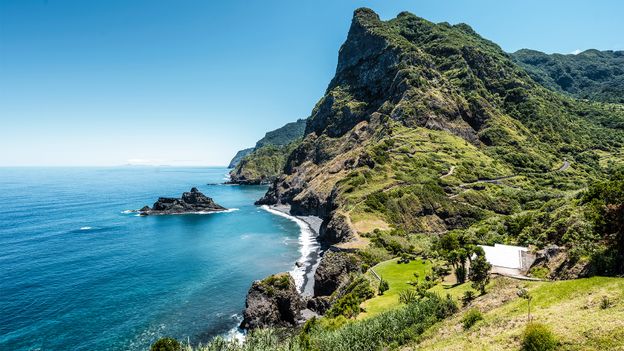

Miguel Silva Gouveia,of the Caminho Real da Madeira Association, recommends a great alternative. Consisting of six pathways commissioned by the King of Portugal in the 19th Century, the Caminho Real (“Royal Road”) is a 181km trail that nearly loops the island, while other shorter walks pierce Madeira’s mountainous interior.

“The Caminho Real was built for mobility, for transporting goods, so this is its purpose,” explained Gouveia. “This is a good alternative for people to know Maderia in an immersive way.”
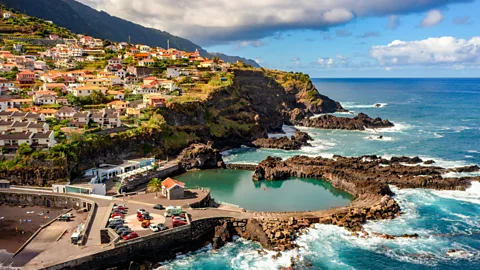
Some Caminho Real routes offer sweeping views of one of Madeira’s main natural features that remind visitors of Hawaii: its stunning, multicoloured beaches. Surrounded by crystal-clear waters, Madeira’s beaches range from golden sand imported from Morocco to striking black-pebbled beaches created by ancient volcanic activity. There are also excellent opportunities for water sports here, including surfing, diving and even whale-watching.
 Getty Images
As a result, this far-flung corner of Europe has experienced a recent uptick in visitors since the Covid-19 pandemic. According to local guides, there has also been a major shift of the type of visitors coming as well.
“There were families with children [coming after the pandemic], there were [digital] nomads, there were young people that were just trying to go somewhere,” said Ana Isabel Faria, who works as a tour guide on the island. “They arrived here and said, ‘Oh my God, where am I?’ They were amazed.”
As more people discover Madeira’s natural beauty, residents here are determined to maintain the island’s laidback culture and preserve its delicate ecosystem.
