


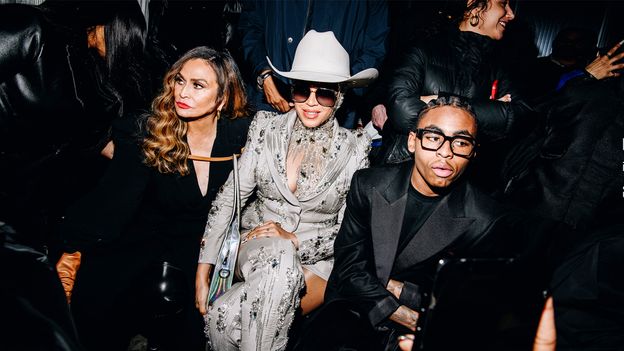

“I think that there are these narratives about what America is, and that’s always been coded as white,” said Francesca Royster, a professor of English and Critical Ethnic Studies at DePaul University and the author of the book Black Country Music: Listening for Revolutions. “The cowboy has been this heroic image to justify Western expansion, and it just seems necessary to make that figure white, even though there were always Black cowboys.”

 Getty Images
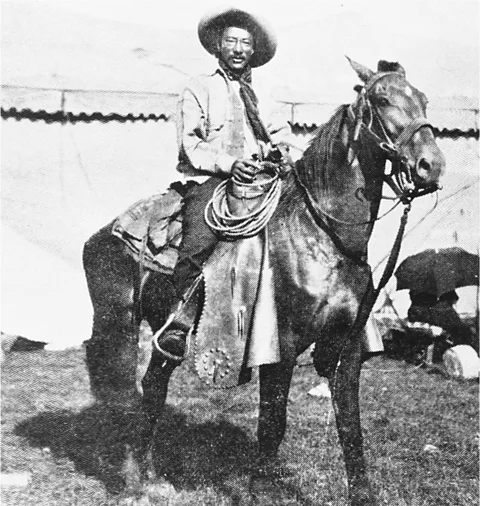
Many people are not aware of how deep cowboy culture runs in the Black community, both historically and today. Beginning in the early 1800s, one out of every four cowboys was Black and horsemanship was an important part of many African American communities well into the 1950s. Even rodeo steer wrestling, known as “bulldogging”, a technique where a bull is wrestled to the ground using its horns for leverage, was invented by a Black cowboy named Bill Pickett. He was the first African American man to be inducted into the National Rodeo Hall of Fame.
“I hope it will change things.” Royster said, referring to how Beyoncé’s dive into the country genre. “Thinking about Beyoncé’s Instagram post where she talked about feeling unwelcome in country music spaces. As someone who’s been studying Black country music, that to me was a familiar refrain. But I really feel like things are moving fast in terms of changing the culture around country music for diverse listeners and audiences as well as performers.”
In recent years other musicians from Lil Nas X to Blanco Brown have delved into the genre, and their successes have served to highlight the work of musicians like banjo player Rhiannon Giddens and singer-songwriter Brittany Spencer, who have been playing with the genre for years, and are featured on Cowboy Carter. And now, the Texas Hold ‘Em singer, who at the album’s debut made history as the only Black woman to be at the top of Billboard’s Hot Country Songs chart, is the latest to carry the torch forward.
