


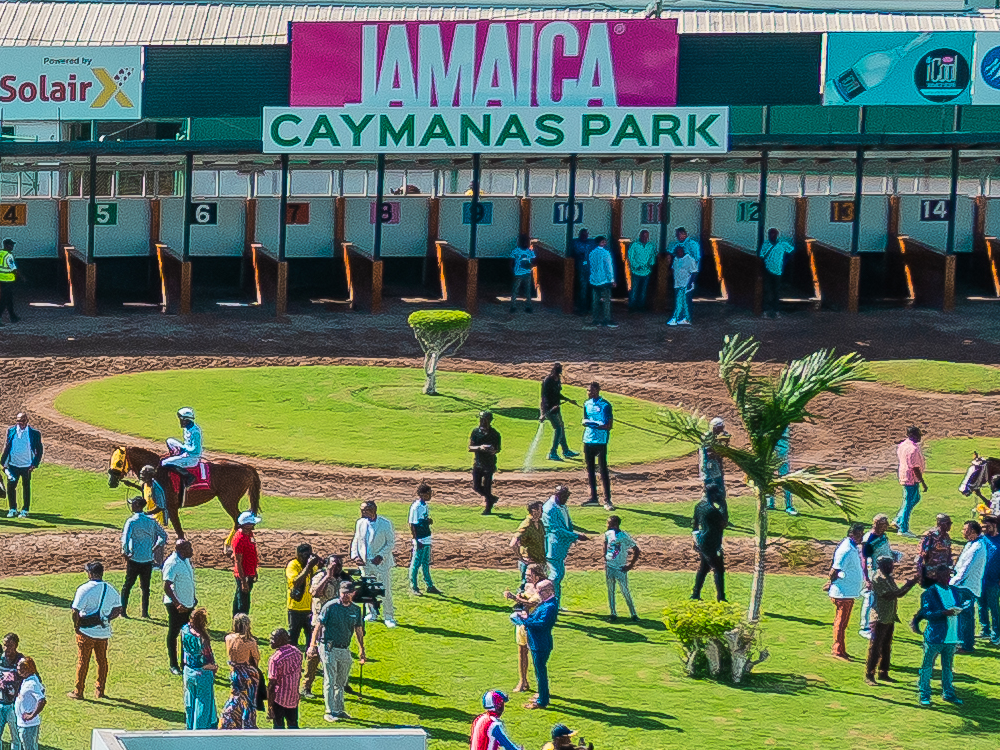



Today, horse racing in Jamaica employs more than 100,000 people.
Source: Jamaica is committed to the recovery of tourism and its people. Photo Credit: Supreme Ventures Group Limited
Tourism is Jamaica’s main source of foreign exchange that contributes 30% of gross domestic productboth directly and indirectly. The industry employs approximately 175,000 Jamaicans and serves as a major economic driver in sectors such as construction, banking and finance, utilities, entertainment and agriculture. More than just a vacation destination, Jamaica’s tourism is the backbone that supports communities, sustains small businesses and drives nationwide economic growth.
That backbone was tested when Hurricane Melissa hit the island, causing widespread anxiety among travelers and raising questions about recovery efforts. While the storm heavily affected the western regions, two-thirds of Jamaica, including Kingston and Portmore, remained largely unaffected, allowing the country to recover quickly and begin to rebuild its most important economic lifeline: travel.
Racing heritage. Jamaica’s long-standing sporting heritage
Horse racing has deep roots in Jamaican culture. The island held its first official horse race in 1816, starting a tradition that grew into a national passion. The creation of Caimanas Park in the 1980s turned that early history into a thriving racing industry.
Today, horse racing in Jamaica employs more than 100,000 people, each supporting at least 50 individuals, including trainers, grooms, vets, jockeys and local vendors. Sport is both a cultural cornerstone and an economic engine that provides stability for Jamaican families across the country.
Facing the storm. Addressing misconceptions after Hurricane Melissa
After Hurricane Melissa, providing accurate information became critical. Heather Goldson, head of marketing at Supreme Ventures Group (SVG), describes how they responded:
“You’re always going to run into a situation where you’re focused on sending that message,” he said. “The reality is that we’ve been able to handle it. Kingston has not been hit…Kingston has worked hard to ensure West gets support.”
Goldson emphasized that multiple livelihoods dependent on events such as the Mouttet Mile. “I also have to think about my caterers, DJs and small businesses who also depend on this activity on the Mouttet Mile. So we balanced it out… People welcome to Jamaica. Jamaica is open for business… We have an incredibly flexible and forgiving landscape.”
The Mouttet Mile. Jamaica’s first major post-hurricane event
Set in the 200-acre Caymanas Park, just 20 minutes from Kingston, the Mouttet Mile Invitational is one of the most revered races in the English-speaking Caribbean. Held on December 6, this year’s event featured a record purse of $250,000, cementing its status as the region’s top race.
For Jamaican jockey Raddesh Roman, the race represents both national pride and personal achievement. Widely recognized as one of Jamaica’s top jockeys, Roman recently won the Graded Stakes race for three-year-olds, cementing his elite reputation.
Referring to the significance of the Mouttet Mile, he said: “This is one of the biggest races in the Caribbean, so I would be very grateful to add that to my list of honors.”
He also emphasized the emotional importance of unity after the storm. “It’s very important … everybody came out and enjoyed themselves … I’m very excited about what’s happening in our country and we’re going to rebuild.”
A racing ecosystem that supports thousands
The Mouttet Mile drives a huge economic ecosystem. Gary Peart, executive chairman of Supreme Ventures Group, explained the extent of horse racing’s influence.
“So Caimanas supports an ecosystem of about 40-50,000 people,” he explained. “When an owner buys a horse, the horse has to have a trainer, a rider, and that adds up when you buy.”
A quick reopening was crucial. “We were able to reopen very quickly and start racing again … to put money in 40,000 mouths again.”
Peart noted that the event required finding a delicate balance. “People are still coming back… We are trying to find a middle way because the Prime Minister said: “Hey, we need to get back to work.”
Reach a global audience
The Mouttet Mile also extends Jamaica’s international reach. “This is our flagship event,” Peart says. “We are cooperating with Fox Sports. We partner with NYRA, which is the New York Racing Association.”
The impact of broadcasting is significant. “The first year they only showed one race. Today, they’re going to show three…potentially four or five million dollars in media value.”
New developments are more interesting. “NYRA is now considering creating a race in New York where qualifiers will compete to get to Mouttet… US owners will try to win this race to come to Jamaica… The ecosystem will continue to grow.”
A flexible island made for visitors
The Mouttet Mile Invitational represents Jamaica’s resilience, pride in its culture and economic renewal. As tourism returns, small businesses regain strength, and international interest increases, Jamaica is ready to welcome visitors from around the world.
The message is clear. Jamaica is open, thriving and stronger than ever.
